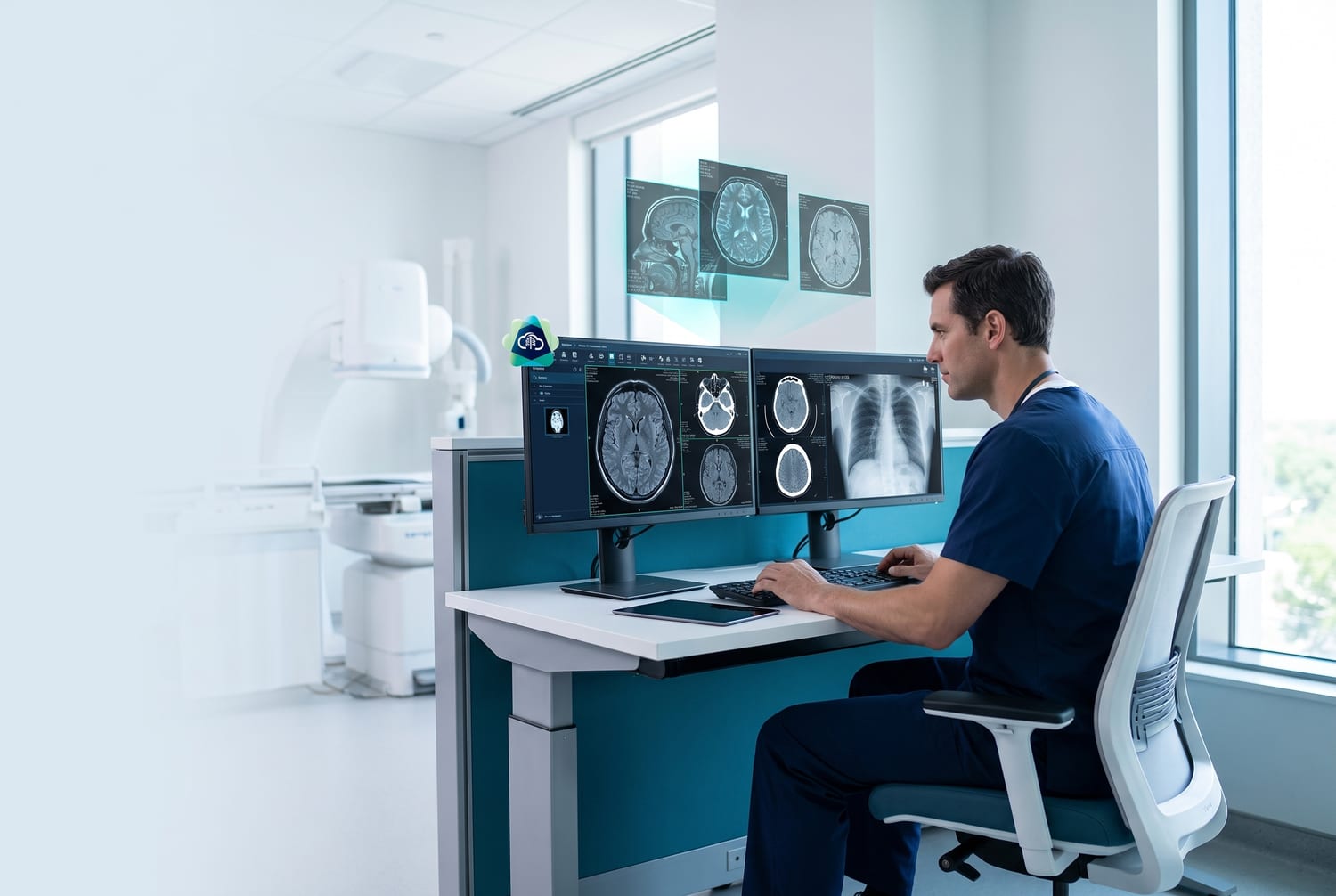
A clinic ERP (enterprise resource planning) system is software that runs every business function of a clinic — billing, stock and inventory, staff commissions, expenses, and reporting — from a single database. Unlike a standalone EMR or appointment book, a clinic ERP connects the money side of your practice to the clinical side, so a consultation, the medication dispensed, the invoice issued, and the stock deducted all happen in one flow. Across Malaysia and Southeast Asia, more clinic owners are searching for "clinic ERP" because running a modern practice on disconnected tools — one app for appointments, a spreadsheet for stock, another system for payroll commissions — no longer scales.
What Is a Clinic ERP?
ERP stands for enterprise resource planning. In manufacturing and retail, ERP systems like SAP or Oracle unify finance, inventory, HR, and sales into one platform. A clinic ERP applies the same idea to healthcare: one system of record for every resource your clinic manages — money, medication, staff time, and equipment.
A true clinic ERP covers six core areas:
- Finance and billing — invoices, payments, packages, credit notes, insurance panel pricing, and e-invoice compliance
- Inventory management — stock levels, batch and expiry tracking, reorder alerts, and inter-branch stock transfers
- Staff and commissions — doctor and therapist commission plans, locum tracking, and performance reporting
- Reporting and analytics — daily revenue, collections, expenses, and profitability per branch in real time
- Patient engagement (CRM) — recalls, follow-ups, loyalty programs, and marketing campaigns driven by patient data
- Compliance — LHDN e-invoicing in Malaysia, PDPA data protection, and audit trails
If a platform only handles appointments and medical records, it is an EMR or practice management tool — not an ERP. The ERP label is earned when the operational and financial modules talk to each other automatically.
Clinic ERP vs Clinic Management Software: What Is the Difference?
In practice, the two categories have converged. A modern clinic management system like MedicalMet is a clinic ERP — the difference is historical, not functional. Legacy clinic software grew out of the appointment book and patient record. ERP software grew out of accounting and inventory. Today, the best platforms cover both ends.
The distinction that still matters is depth. Ask these questions when evaluating any system that calls itself a clinic ERP:
- Does dispensing a medication automatically deduct stock by batch and expiry date, or do you update a spreadsheet later?
- Does an invoice automatically calculate the doctor’s commission, or does someone tally it at month end?
- Can you see today’s revenue, collections, and outstanding balances across all branches without exporting anything?
- Does billing data flow to your accountant automatically through an accounting integration?
- Is e-invoice submission built in, or bolted on?
If the answer to any of these is "manual work", you are looking at partial software — and paying for the gap in staff hours. Our guide comparing clinic management software and generic EHRs covers the clinical side of this same problem.
“The real test of a clinic ERP is simple: when the owner asks "how much did we make today, and where is the money?", nobody should need to open a second system to answer.”
— MedicalMet product team
Why Are Clinics Searching for ERP Systems in 2026?
Three forces are pushing Malaysian and Southeast Asian clinics toward ERP-grade systems.
1. E-Invoicing Mandates Connect Clinical and Financial Data
Malaysia’s LHDN e-invoice rollout forces every invoice to carry structured, validated data submitted to MyInvois. Clinics running billing in one system and records in another face double entry on every transaction. An integrated platform with built-in LHDN e-invoicing submits automatically at the point of billing — no re-keying, no month-end consolidation panic.
2. Multi-Branch Growth Breaks Spreadsheet Operations
A single-doctor clinic can survive on memory and a notebook. A three-branch group cannot. Stock transfers between branches, per-branch profitability, and consolidated reporting are exactly the problems ERP systems were invented to solve. MedicalMet customers managing multiple branches track inventory and revenue across locations from one dashboard, with batch-level expiry tracking that reduces medication waste by up to 85% compared with manual first-in-first-out picking (MedicalMet internal data, 2026).
3. Staff Costs Demand Automated Commission Tracking
Healthcare wages across Southeast Asia keep rising, and many clinics now pay doctors, therapists, and sales staff on commission structures. Calculating these by hand is slow and error-prone. ERP-style commission plans compute earnings automatically from each invoice line, so month-end payroll takes minutes instead of days.
How MedicalMet Works as an All-in-One Clinic ERP
MedicalMet was built as a single database for the whole clinic, which is exactly the ERP promise. Trusted by 5,000+ healthcare professionals across Malaysia, Singapore, Brunei, the Philippines, Thailand, and Vietnam, it maps to every ERP module a clinic needs:
- Finance — invoices, payments, packages, insurance panel pricing, expenses, and LHDN e-invoice submission
- Inventory — stock control with batch numbers, expiry dates, FEFO dispensing, and inter-branch transfers
- People — commission plans, staff roles, and locum management
- Analytics — real-time dashboard and reports covering revenue, collections, and profitability per branch
- Patient CRM — WhatsApp reminders, recalls, loyalty programs, and AI customer profiling
- Clinical — EMR, AI treatment notes, queue management, and online booking, all feeding the same database
Because every module shares one database, the data reconciles itself. A dispensed medication deducts stock, posts to the invoice, updates the commission, and appears in the daily report — with zero duplicate entry. Accounting exports flow to AutoCount or Xero through native integrations.
Do Small Clinics Need an ERP?
Yes — small clinics arguably benefit most, because they have no back office to absorb manual work. When the same person answers the phone, dispenses medication, and closes the till, automation is not a luxury. The objection has always been price: traditional ERP implementations cost five to six figures. Cloud clinic platforms removed that barrier. MedicalMet’s plans start with a Solo tier for single practitioners, and the system scales to multi-branch groups without migration.
A useful rule: if your clinic tracks stock, pays anyone on commission, or issues more than 20 invoices a day, you already have ERP problems. The only question is whether software or your staff absorbs them. For a breakdown of what disconnected tools actually cost a practice, see our guide on clinic software pricing and benefits.
Clinic ERP Evaluation Checklist
Before you sign with any vendor, run this quick checklist:
- One database — billing, inventory, and clinical records must share data, not sync between products
- Batch-level inventory with expiry tracking and automatic deduction on dispensing
- Automated commission calculation per invoice line
- Real-time multi-branch reporting without manual exports
- Built-in LHDN e-invoice submission (for Malaysian clinics)
- Accounting integration (AutoCount, Xero) so your accountant stops re-keying
- Cloud-based access with no server to maintain
Watch Out for "Integration Theatre"
Some vendors market a bundle of loosely connected products as an ERP. Ask to see one transaction flow end-to-end in a live demo: consultation, dispensing, invoice, stock deduction, commission, report. If the demo switches apps midway, the "integration" is marketing.
The clinics that grow fastest in 2026 are not the ones with the most staff — they are the ones where the software does the back-office work. Whether you call it a clinic ERP or an all-in-one clinic management system, the outcome is the same: one login, one database, and numbers you can finally trust.

Cedric Lau
Business Development Manager, MedicalMet